Introduction
In today’s world, where everything and anything is turning out to be a conversation on the internet, mental health is just one of the topics that has recently been talked about a lot more openly than it ever was. Social media has become the new source of connection for an individual to the outside world, hence anything that gets attention on it, has the potential to be discussed at schools, colleges, workplaces and even governments. For the generation born after the 2000's ( called the Gen- Z’s) social media acts as the primary source of information. Hence, their perception of mental health formed through social media amongst the Gen-Z’s becomes an essential topic to talk about in today’s day and age.
The mental health revolution: from taboo to trending
A few years ago, open discussions about mental health on social media would have been a rare sight to see. However, people talking about their own mental health struggles today is not uncommon. The shift from stigmatised silences to honest discussions about mental health can be attributed to celebrities and influencers opening up about their own struggles. Celebrities like Selena Gomez and Deepika Padukone started the trend by being honest about their own mental health and they were followed by other global as well as Hollywood pop stars. Soon, people started to view therapy as an acceptable concept which was not just meant for “crazy” people. Social media was turning out to do something which couldn’t be achieved through traditional offline campaigns and outreach programs for decades. Maybe the anonymity and safety behind not having to face people in real life gave people the courage to talk about something so intimate and vulnerable. Fortunately, the content people created on social media changed how they perceived mental health in general too. As of now, mental health is no longer a taboo topic on social media. People are much more open to admit that they’re having a hard time or even share coping strategies that they have used to get out of a bad phase in their life.
The mental health revolution: from taboo to trending
A few years ago, open discussions about mental health on social media would have been a rare sight to see. However, people talking about their own mental health struggles today is not uncommon. The shift from stigmatised silences to honest discussions about mental health can be attributed to celebrities and influencers opening up about their own struggles. Celebrities like Selena Gomez and Deepika Padukone started the trend by being honest about their own mental health and they were followed by other global as well as Hollywood pop stars. Soon, people started to view therapy as an acceptable concept which was not just meant for “crazy” people. Social media was turning out to do something which couldn’t be achieved through traditional offline campaigns and outreach programs for decades. Maybe the anonymity and safety behind not having to face people in real life gave people the courage to talk about something so intimate and vulnerable. Fortunately, the content people created on social media changed how they perceived mental health in general too. As of now, mental health is no longer a taboo topic on social media. People are much more open to admit that they’re having a hard time or even share coping strategies that they have used to get out of a bad phase in their life.
How social media is making therapy cool
Social media, through its posts, reels and memes has changed the way we look at therapy. With a lot of educational posts, relatable memes and mind boggling reels where we often have our “aha” moment, the internet has made people realise that therapy is cool, liberating and most important of all, necessary. Here are some ways in which social media has placed therapy in a new light-
Mental health for the masses
It’s no lie that therapy is expensive. Unfortunately, due to shortage of mental health professionals, therapy is quite costly and a bit unaffordable by the common public. Social media cannot replace therapy, but it can provide free bit- sized knowledge which can make people self aware enough to follow healthy patterns in their life. Most people today, including those living in rural areas have a phone today. Thus, social media makes it possible for people living in orthodox areas to know about mental health and therapy. So, the next time you see a mental health concept such as trauma responses or attachment styles being explained in 30 seconds, don’t skip it!
Finding your people
Social media has helped millions by helping them find communities of people who have gone through the same experiences. There are public as well as private communities available on every social media platform today, be it Instagram, Facebook, Whatsapp or Snapchat. It is truly magical to find someone who relates to you and cares for your mental health, even if they are thousands of miles away from you. Social media also aids in reducing isolation and increases social support through these communities which is good for everybody’s mental health. One of the most prominent example of strongly-binded communities are found on apps like discord and reddit, where strangers can share threads and talk about their struggles without feeling scared of being judged.
When social media gets it wrong
Social media is not always great at portraying a healthy impression of mental health. Since social media is free to use and includes raw opinions from the public, it has the potential to be painting a negative picture of mental health. Here are some of the negative sides of social media in terms of mental health-
The self diagnosis spiral
As of today, it’s extremely easy to watch a 15 second tik-tok on ADHD and think that you too have it. The reality is that social media is not an expert in mental health diagnosis. Incomplete information about certain disorders or extreme unhealthy patterns of behaviours, without detailed knowledge about it can make us believe that we all have disorders. However, that’s not true. Only qualified mental health professionals are allowed to diagnose an individual, that too after performing certain tests and verifying a lot of information from the past and present. So, the next time you see a 15 second video determining whether you have ADHD, please skip through:)))
The Rise of "Aesthetic" Mental Health
Social media often ends up glorifying serious mental health conditions to make it look aesthetic and pleasing. For example, I'm pretty sure all of us have seen at least one instagram post or pinterest board labelling depression as “soft girl depression”. Romanticising mental illnesses and unhealthy patterns is dangerous, as it can send the wrong message to the public. It’s not easy to talk about these struggles and as an internet generation, where mental health has just started gaining awareness in the right direction, it wouldn’t be cool to portray it as something which is untrue and unrealistic.
Doomscrolling & Digital Burnout
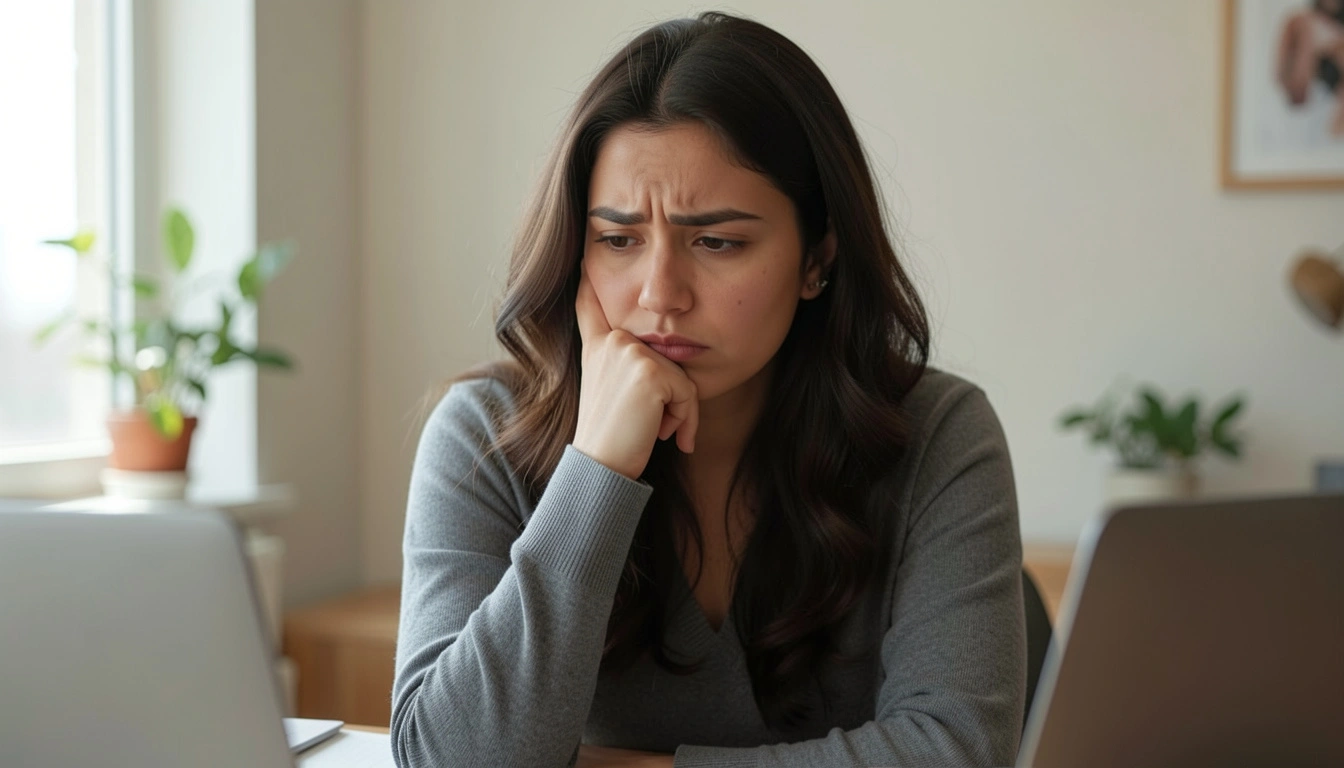
Constant exposure to heavy mental health content can actually worsen anxiety. Doomscrolling through negative posts can make problems feel bigger than they are. For example, watching endless Tik Tok on trauma can leave people feeling drained rather than empowered. Moreover, in a world of ups and downs, social media is merely a calculated half- impression of what people actually go through in real life. People may not be as open to show how much they are struggling, which leads users to believe that they are the only ones going through bad phases alone. This leads to unhealthy comparisons, which can turn into depression or social anxiety.
How to Navigate Social Media Without Losing Your Sanity
To make social media a healthier space, it’s crucial to follow credible sources like licensed therapists and psychologists instead of influencers who may lack proper knowledge. Taking breaks from social media can help prevent burnout and overexposure to distressing content. Fact-checking information before accepting it as truth is essential, as misinformation spreads quickly. Most importantly, engaging in offline well-being activities—such as meditation, journaling, or even seeking real-life therapy—ensures that mental health care extends beyond the digital world.
Final Thoughts: Can Social Media Be a Friend, Not a Foe?
Social media isn’t inherently bad—it’s how we use it that matters. It can be a powerful tool for education and support, but it shouldn’t replace professional help. While it fosters important discussions and builds communities, it also presents risks like misinformation and self-diagnosis. The key is balance: using social media as a supplement to, rather than a replacement for, real mental health care. Next time you see a mental health post, ask yourself: Is this helping or hurting my perception of mental well-being? Let’s make social media a place of real support, not just viral content.