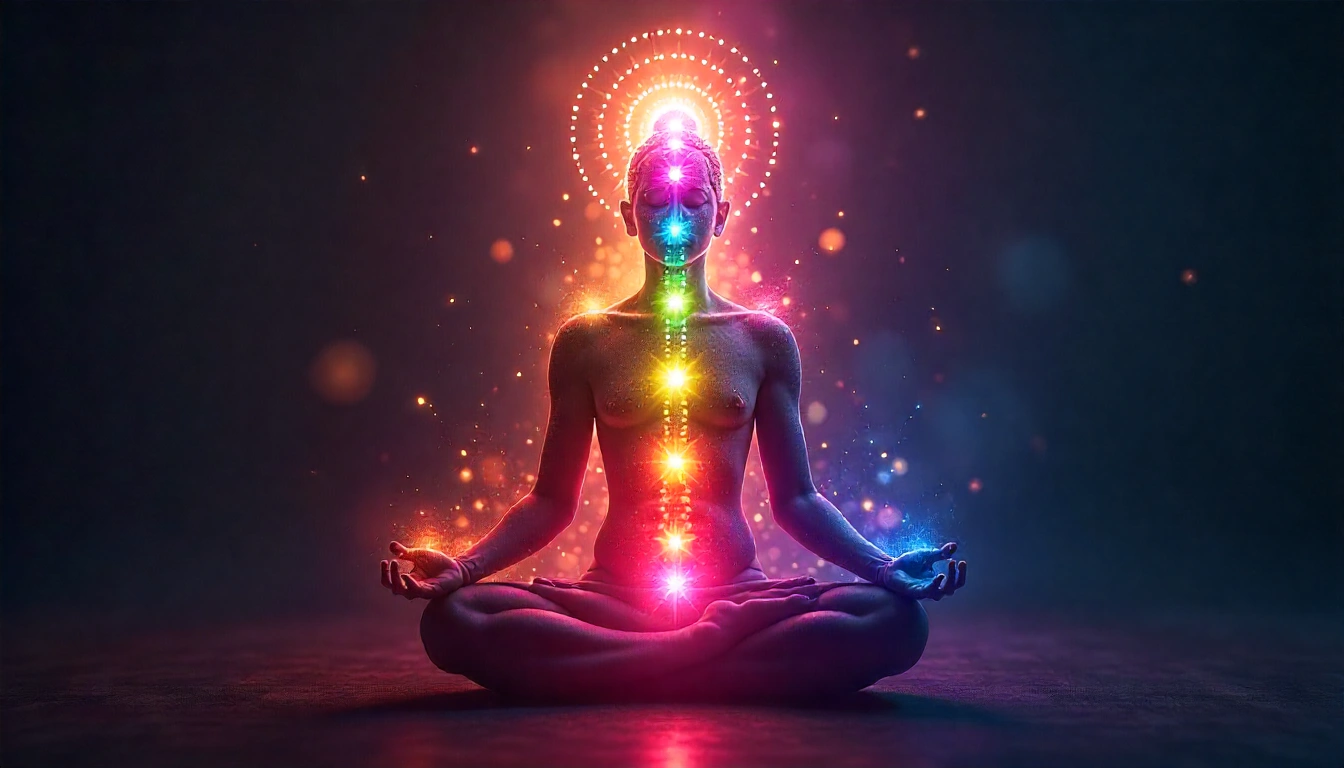
Chakra is the psychophysical center within the body and mind structure. Vritti is distortion or alteration of the originally peaceful state of consciousness or state of mind— longings, desires, emotions, or any kind of movement away from the original silent state of mind.
Chakras perform many vital functions within the body and mind. Every emotion and state of mind is controlled by a respective Chakra.
Mooladhara Chakra is the first center which means root and base. It is located at the base of the spine at Coccyx. Since the entire body is supported by this point, it is also called the Root Chakra. Mind sprouts from this point– when energy unfolds itself, it gives rise to the various expressions of mind.
What is Muladahara (Root) Chakra
Mooladhara is connected to solid matter. It controls the solid components of the body like nails, hair, and bones. When balanced, at the physical level, it gives good health, added glow, and a pleasant scent. On the mental level, it gives the feeling of steadiness, stability, and down-to-earth nature. Four emotions or desires that are fundamental to the human mind are associated with it: physical desire, psycho-physical desire, psycho-spiritual desire, and spiritual desire.
Root Chakra Location
The Root Chakra is located at the base of the spine, near the perineum, between the tailbone and the pelvic floor. It connects us energetically to the earth, serving as the anchor for the body's energy system. Physically, it governs the adrenal glands, legs, feet, and large intestines.
The four human desires
The feeling of happiness is met through the four desires. When you recognize these desires and find a medium to satisfy them, you attain a deeper sense of happiness.
Self-preservation is a basic physical desire. Through evolution, we have been trained to either run or freeze in a spot out of fear during danger. The fear can also turn into aggression or into a position of power to safeguard ourselves.
At the next level, you recognize that there are no enemies outside but inside your own mind— you turn inwards and fight your imperfections and weaknesses. The final realization is the desire to attain psychic expansion. This is similar to the physical expansion where you crave external control, however, this is directed inwards towards spirituality.
Basic physical desires are self-preservation, sleep, food, and procreation instincts but the psychological desires can be different. For instance, wanting healthy food is the body’s physical desire but your mind may crave a pizza. These differences often lead to a conflict between these two– the psychophysical desire often wins because we seem to receive much more happiness when we satisfy the desire of the mind than of the body.
In Sanskrit, the desire of the mind for physical objects is called “Artha” which means money or any medium to satisfy physical desires. Many people get so stuck in these two levels of desires that they are unable to think at the psycho-spiritual and spiritual level, which is why they struggle to feel completely happy with life.
We try to fulfill all our physical and psychophysical desires through materialistic pleasures like eating, traveling, possessing things but it cannot give the infinite happiness that we crave. If your desires are well channelized through deeper aspects like arts and spirituality, you can open up and flourish while the lack of it can turn your desires to become destructive leading to negative traits including addiction, aggression, or deception.
The desire for infinity and unity is ‘Dharma’. One desire is ‘Vistara’ or expansion– when we achieve something, we feel satisfied as it is an expansion. The second desire is ‘Rasa’, a feeling of connectedness, or wanting to connect to something bigger and be in harmony with it. The next desire that comes is the wish to do something noblefor instance, you may like to eat but instead spend your resources to feed, clothe, and house poor people.
Then, there is a desire for psychospiritual longing– to go beyond the movement within the mind to serenity. Finally, there is a spiritual longing of the soul for the infinite by being liberated from the bondage of the mind. This is similar to Maslow’s hierarchy of needs pyramid wherein one desires to meet physiological needs and safety needs first, followed by belongingness needs. They further move towards wanting to fulfill esteem needs and finally want to achieve self-actualization.
Elements of Muladhara Chakra
The Root Chakra, or Muladhara, is deeply connected to the physical world. Its elements and associations reflect its grounding and stabilizing energy:
- Element: Earth – representing stability, structure, and the foundation of life.
- Color: Red – symbolizing vitality, strength, and life energy.
- Sense: Smell – tied to survival instincts and connection to the Earth.
- Governing Glands: Adrenal glands – regulating the body's fight-or-flight response.
- Physical Associations: Spine, legs, feet, bones, and the large intestine.
Root Chakra Symbol
The Muladhara Chakra is depicted as a red, four-petaled lotus, with the following elements:
- Four Petals: Representing the four human desires (Dharma, Artha, Kama, Moksha).
- Square in the Center: Symbolizing the Earth element and groundedness.
- Inverted Triangle: Denoting the downward flow of energy and stability.
- Seed Sound (Bija Mantra): LAM is inscribed in the center of the lotus, representing the vibrational essence of the Root Chakra.
Root Chakra Mantra
The Bija Mantra (Seed Sound) for the Root Chakra is LAM. Chanting this mantra activates and balances the Root Chakra by aligning its energy.
How to Chant:- Sit comfortably with your back straight.
- Take deep breaths and chant \"LAM\" in a low tone.
- Visualize red light glowing at the base of your spine, expanding with each chant.
- Gesture:
- Sit in a comfortable meditative position.
- Bring your hands to your lap, palms facing upward.
- Interlace your fingers, leaving your thumbs pointing upward.
- Focus:
- Visualize a strong connection to the Earth while performing this mudra.
- Combine it with chanting the LAM mantra for amplified grounding effects.
- A sense of stability and strength in your body.
- Improved digestion and relief from lower back or hip pain.
- Heightened awareness of your physical environment and sensations.
- Feeling grounded, secure, and connected to reality.
- Reduced fears, anxieties, and survival-related worries.
- A renewed sense of belonging and trust in yourself and others.
- An enhanced ability to focus on the present moment.
- A stronger connection to nature and the Earth.
- A solid foundation for exploring higher chakras and spiritual growth.
- Chronic fatigue or lethargy.
- Issues in the lower back, legs, feet, or hips.
- Digestive disorders or problems with elimination.
- Persistent feelings of fear, anxiety, or insecurity.
- Difficulty trusting others or feeling disconnected from reality.
- Compulsive behaviors tied to survival, like overeating or overspending.
- Lack of focus or concentration.
- Restlessness and an inability to stay present.
- Difficulty making decisions due to fear of instability.
- Stability and Grounding: Feeling deeply connected to your body and environment.
- Courage: The ability to face fears and overcome survival challenges.
- Resilience: A solid foundation to adapt to life's ups and downs.
- Abundance Mindset: Cultivating trust in the universe's provision.
- Vitality: Enhanced physical energy and endurance.
- Increased strength, stamina, and immunity.
- Relief from lower back pain and improved posture.
- Better digestion and elimination.
- Reduced anxiety, fear, and stress.
- A sense of belonging and self-confidence.
- Greater patience and emotional stability.
- Foundation for exploring higher chakras.
- Deepened connection to nature and universal energy.
- The ability to manifest desires with grounded action.
- Mountain Pose (Tadasana): Enhances stability and balance.
- Child’s Pose (Balasana): Promotes grounding and relaxation.
- Garland Pose (Malasana): Opens the hips and strengthens the pelvic region.
- Warrior Pose (Virabhadrasana): Builds strength and confidence.
- Bridge Pose (Setu Bandhasana): Stimulates the base of the spine and root energy.
- 'I am safe and secure.'
- 'I trust myself and the world around me.'
- 'I am deeply connected to the Earth.'
- 'I have everything I need to thrive.'
- Sit in a quiet place, focusing on your breath.
- Visualize a red glowing light at the base of your spine.
- Inhale deeply and chant LAM while imagining the light expanding.
- Feel the energy grounding you, connecting you to the Earth.
The mantra helps release fears and anxieties, promoting feelings of security and stability.
Root Chakra Mudra
The Root Chakra Mudra (gesture) helps activate and balance the Muladhara Chakra:
Muladhara Chakra Opening Symptoms
When the Root Chakra begins to open and balance, you may experience various physical, emotional, and mental changes. These symptoms indicate that energy is flowing freely through the chakra:
Physical Symptoms:
Emotional Symptoms:
Spiritual Symptoms:
What happens when Root Chakra is Blocked?
A blocked Root Chakra can disrupt your sense of security and grounding, affecting physical, emotional, and mental well-being. Symptoms include:
Physical Symptoms:
How To Activate Your Mooladhara Or Root Chakra?
When the Mooladhara Chakra is developed there is multilateral development of the human personality, just like the growth of a flower from a seed. Spiritual awakening can be attained from activating the Mooladhara Chakra through sound: spiritual sound energy can awaken the seed which is dormant in us and open all six petals to direct the consciousness upwards.
Mantra meditation, asanas that open hip, like Yog mudra, Dirgha pranam, Gomukhasana, Bhujangasana, Katapaschimotanasana, Vajrasana, are beneficial for mooladhara awakening. Practice breathing while lying down and focus on the coccyx to activate your root chakra.
Balance Your Mind, Body, and Spirit: The MBTI Chakra Test
In this section, we introduce readers to the unique MBTI Chakra Test available on Infiheal's website, highlighting its potential to harmonize personality traits with chakra energies.
Experience the fusion of personality assessment and chakra balancing with our MBTI Chakra Test. Discover how your personality aligns with your chakra energies, and embark on a journey towards holistic well-being today.
Muladhara Chakra Powers
When the Root Chakra is balanced, it unleashes its innate powers, such as:
Muladhara Chakra Activation Benefits
Activating and balancing the Root Chakra brings holistic benefits:
Physical Symptoms:
Muladhara Chakra Yoga Poses
Specific yoga poses help stimulate and balance the Root Chakra:
Root Chakra Affirmations/Meditation
Repeat affirmations to reprogram limiting beliefs tied to security and survival:
Meditation Practice:
By incorporating these practices, you can awaken your Root Chakra, fostering a sense of stability, security, and vitality in your life.
Conclusion
Balancing the Muladhara (Root) Chakra is the foundation for building a harmonious and secure life. It anchors you to the present moment, providing the stability and resilience needed to navigate life’s challenges. By integrating grounding practices, yoga, affirmations, and mindful activities, you can unlock the incredible potential of your Root Chakra, paving the way for holistic well-being. To dive deeper into understanding your chakra energies and their connection to your personality, take the MBTI Chakra Test on Infiheal. This test will help you uncover unique insights about your energy balance and guide you on your journey to alignment and self-discovery.