Introduction
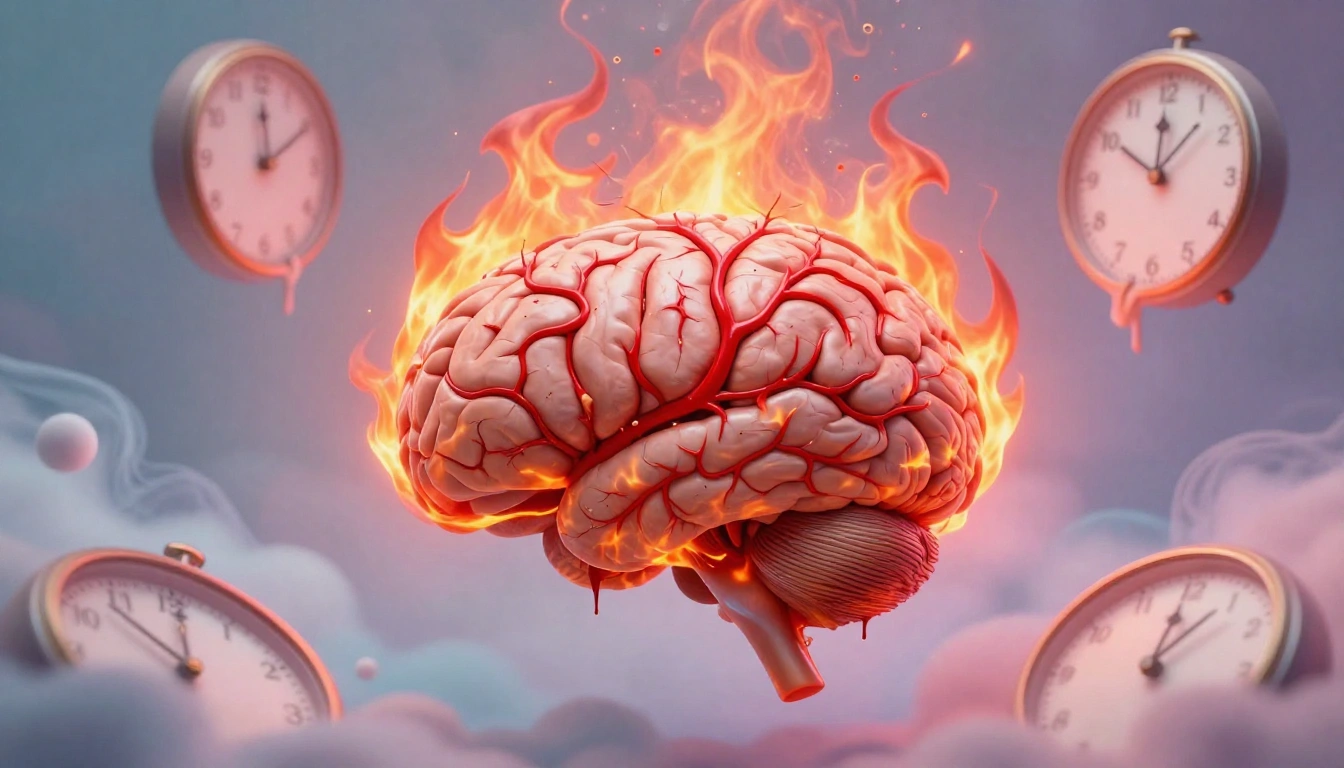
Fever, as we understand, is often a result of exhaustion, viral disease, flu or a symptom of something larger. We know when we have a fever that something in our body isn’t right and we need to fix it. But what is less known is that fever can be caused by stress too! Yes, you heard that right. Research has confirmed that chronic stress stands as a prominent risk factor for neuro-inflammation in our brain which causes fever. Infact, it doesn’t stop at fever. Stress can cause biological parallels to inflammation such as heightened reactivity, emotional swelling, cognitive fog.Many of us don’t realise how emotional stress changes our brain chemistry. Hence, the aim of this blog is to highlight how stress triggers inflammation in the brain, the symptoms of neuro-inflammation caused by stress and ways to cool your mind’s inflammation.
What is Neuro-Inflammation of the mind?
Neuro-inflammation is when emotional or psychological stress activates pathways similar to physical inflammation. Stress-induced neuroinflammation is the brain's immune system overreacting to chronic stress, causing immune cells (microglia) to become overactive, release inflammatory chemicals (cytokines), and damage neurons, leading to cognitive issues, mood disorders (like depression/anxiety), and even neurodegeneration by disrupting brain structure and function, particularly in emotional centers. It involves prolonged activation of the stress response (HPA axis) and immune system, creating a cycle of inflammation that harms brain health.
How does it work?- The mechanism
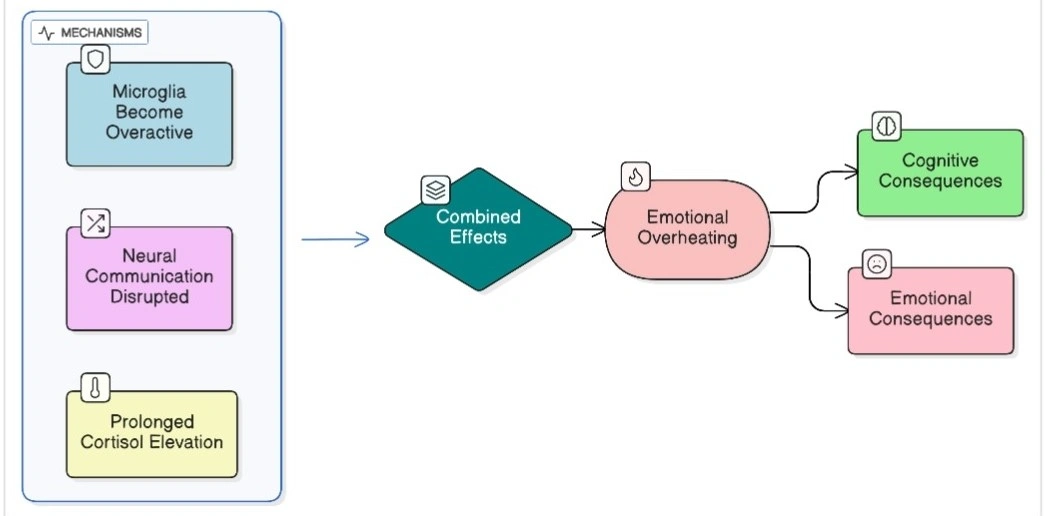
When we talk about brain inflammation, we’re not saying the brain is physically swollen like an injured knee. In emotional contexts, it’s a metaphor for how the brain behaves under prolonged stress - but this metaphor is grounded in real neuroscience. At the simplest level, here’s what happens:
- Microglia (the brain’s immune cells) become overactiveMicroglia act like tiny firefighters. Their job is to protect, clean and repair. But when stress becomes chronic, they switch into “high alert.” This is similar to when firefighters spray water everywhere even when there is no real fire -not harmful on day one, but exhausting and disruptive over time.
- Cortisol - the stress hormone stays elevatedCortisol is meant to spike briefly during danger. Under emotional stress, it stays high for longer than necessary. High cortisol disrupts natural brain rhythms, making the mind feel wired, hot, and unable to settle.
- Neural communication becomes disruptedNeurons don’t “talk” to each other as smoothly. The pathways responsible for decision-making, emotional regulation, and focus start lagging. This is why under heavy stress, we feel foggy, irritable, forgetful, or strangely reactive to small things. When these three mechanisms combine, stress and brain inflammation can feel like emotional overheating - where the mind becomes sensitive, swollen, and reactive from within.
Symptoms of neuroinflammation caused by stress
There are often the symptoms of neuroinflammation caused by stress that people dismiss as ‘just being stressed.’ Usually these symptoms look like-
- cognitive fog (“brain feels hot and heavy”)
- emotional swelling (overreaction to tiny things)
- sensory sensitivity (noise feels sharper, light feels harsher)
- fatigue without physical exhaustion
- intrusive thoughts or mental restlessness
- irritability, short temper, feeling “inflamed” inside
- lowered stress tolerance
These symptoms can mimic what may seem like a fever, fatigue effect or over-exhaustion which may be attributed to overworking, lack of physical rest etc. However, when individuals reflect further and do a mental check in is when they might realise that our bodies can actually produce physical symptoms when we’re subjected to stressful situations for a long period of time. These chronic stress environments may not affect your life on a day to day basis but eventual build up of bottled up stress without a way of healthy coping or release may cause irreversible damage to our immune system. Chronic stressful situations can even be a toxic workplace, a dysfunctional family with daily fights, bullying ( verbal or physical) in schools or college or a co-dependent relationship.
Cooling the neuro-inflammation
Here are some ways to cool your inflammation-
- Interrupt the “Cortisol Loop” with Breath-Posture PairingMost people breathe deeply or adjust posture - but doing both together interrupts the body’s cortisol rhythm far more effectively. Straightening the spine opens the diaphragm, and slow exhalations tell the nervous system there is no danger. This combination shifts microglia out of high alert and reduces that “internal heat” feeling faster than breathing alone.
- Externalize Overload Through “Cognitive Offloading Moments”When stress disrupts neural communication, the brain gets jammed with unprocessed fragments. Writing one-line summaries of what you’re feeling or remembering (“I’m overwhelmed because…”) reduces neuroinflammatory load by moving data outside the brain. This is not journaling - it’s temporary offloading, like clearing tabs so your system stops overheating.
- Regulate Sensory Input Using the “Selective Dimming Rule”Instead of full sensory breaks, dim only one sensory channel at a time -lower brightness, reduce noise, soften textures, or step away from strong smells. Adjusting a single input recalibrates the sensory cortex without shutting down your environment entirely. This small shift often cools mental sensitivity that feels like swelling or irritation.
- Use Micro-Recovery Gaps to Reset Glial ActivityStress-driven neuroinflammation builds up in micro-moments, not just big emotional events. Creating 20-40 second pauses after emotional spikes, tough conversations, or demanding tasks resets glial activity before it accumulates. Think of these as tiny pressure valves: subtle, private, and powerful.
- A Subtle Support System: Using Healo as a “Cooling Companion”When emotional stress begins to mimic inflammation - fogginess, sensitivity, mental heat - we often don’t recognise the early signs. Healo gently steps in as a reflective companion: it slows racing thoughts, mirrors back overlooked tension, and guides small grounding adjustments that cool the mind before stress becomes overload. It’s not a therapist, but a soft space that reduces internal heat when we don’t have the clarity to do it ourselves.