Pura means “a city” or “town”, and Mani refers to something that dazzles like a diamond. Manipura can be regarded as “a city of jewels”. Manipura chakra represents a state of mind where the external reality becomes highly attractive. We fall in love with the external world and get fascinated with its glory.
Located at the navel point, the third chakra represents energy and activity. The symbolism of the Manipura chakra is the domination over the environment wherein you are trying to conquer nature and the world.
What is Manipura Chakra
The Manipura Chakra, also known as the Solar Plexus Chakra, is the third of the seven primary chakras in the body, according to Hindu and yogic traditions. Located somewhere between the navel and the base of the sternum, a couple of fingers above the belly button, this chakra is associated with personal power, self-esteem, confidence, and willpower.
Elements of Manipura Chakra
The Manipura Chakra governs the fire element inside of you. It is your strength, your vitality, your ego, your willpower, your stamina, your inner power. It’s the centre where you get things done and your sense of self.
Manipura Chakra’s Natural Element: Fire
The Manipura Chakra is associated with the element of fire, symbolising the "igneous" or fiery qualities within both the body and mind. The emotions connected to the Manipura Chakra are naturally fiery, corresponding to heat and intensity. When this chakra is imbalanced or not functioning properly, we may feel cold, shaky, and lacking in energy, as if our internal "heater" has switched off. In animal symbolism, the ram or goat represents the Manipura Chakra—both are adventurous creatures of the mountains. Their thick fur is symbolic of fire, and their resilient nature embodies strength. The Manipura, or Navel Chakra, governs the digestive system and eyesight. When this chakra is vital and balanced, digestion improves, body warmth increases, and the eyes become sharper and more powerful. It also reflects a strong desire to dominate one's environment. In rare cases, when the Manipura Chakra becomes extremely strong, it can be overwhelming for others, making direct eye contact with the person difficult to bear. Some individuals who work extensively on mastering their Manipura Chakra may develop this kind of intense energy. Overall, this chakra symbolises activity, energy, and heated emotions—qualities that are characteristic of mammals.
Symbol
The symbol of the Manipura Chakra is a yellow, ten-petaled lotus flower and each component of the symbol carries specific meaning. These represent the ten Pranas, the vital forces, which control and nourish all functions of the human body. An additional symbol of the Manipura is that of a triangle with its tip pointing downward. This indicates the spreading of energy, growth and development. Activation of the Manipura Chakra frees one from negative energies and purifies and strengthens one’s vitality.
Color
The color yellow is linked to this chakra, reflecting vitality, warmth, and intellect, much like the radiance of the sun.
Mudra
To balance the Manipura (Solar Plexus) Chakra, these yoga poses are highly effective.
- - Dhanurasana (Bow Pose)
- - Kapalabhati Pranayama (Breath of Fire)
- - High Lunge Twist with Anjali Mudra (Prayer Pose)
- - Parvritta Trikonasana (Revolved Triangle Pose)
- - Vajroli Mudra
- - Bhujangasana (Cobra Pose)
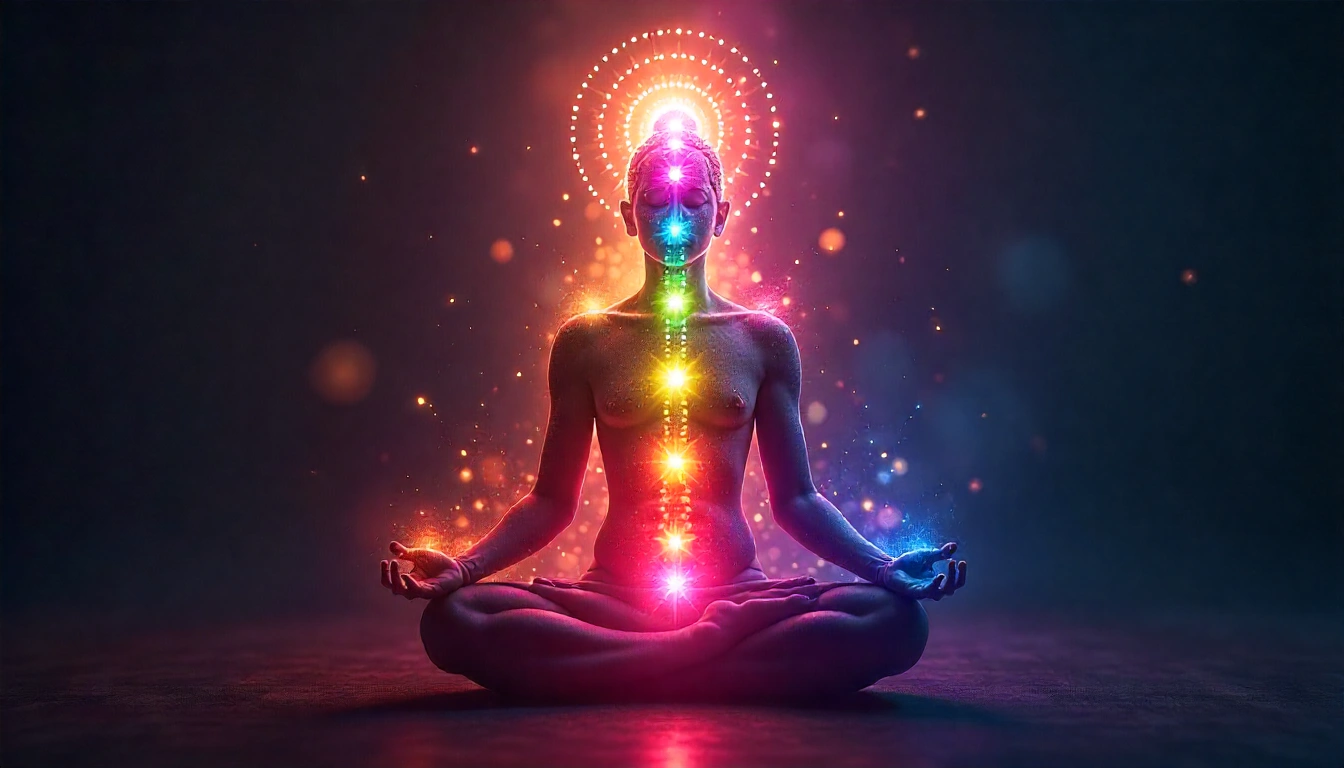
- - Use Hakini Mudra: Sit cross-legged with your back straight. Bring your hands to the height of your solar plexus, touch the fingertips together, and keep your palms apart. Thumbs point toward the solar plexus while other fingers extend outward.
Visualize the fire inside you—burning away what’s no longer needed, fueling your body and mind. A strong inner fire helps you live in alignment with who you are, empowering you to chase your dreams. Keep your fire burning steadily, transforming energy but avoiding burnout.
Manipura(Solar Plexus) Chakra blockage Symptoms
If you feel vulnerable to cold, it can mean your Manipura chakra is weak or blocked. Physical signs of a blocked solar plexus can include:
- - Feet and hands quickly get cold.
- - Weak digestion.
- - Constipation or irritable bowel syndrome.
- - Eating disorders
- - Issues related to the pancreas, liver, or colon.
Some mental signs of a weak navel chakra can look like this:
- - Aggression
- - Poor self-esteem
- - Lack of courage
- - Feeling stagnant or directionless
- - Neediness
Manipura chakra contains within itself ten ‘vrittis’ or propensities. These emotions are powerful and hot but can turn very cold when the vritti goes out of control, and the chakra stops functioning normally. This suspends the body’s heating system and is why you’re feeling cold.
Manipura Chakra Opening Symptoms
When this energy center is open and balanced, you feel confident, powerful, and ready to take on any challenge that comes your way. Other signs of Manipura Chakra opening include:
Physical Symptoms
- - Good digestion
- - Healthy metabolism
- - A sense of strength and resilience
- - Willingness to take risks and step out of one's comfort zone
Mental Symptoms
- - A strong sense of self-confidence and self-worth
- - A clear sense of personal identity and purpose
- - Ability to make decisions with ease and trust in oneself
- - Clarity of mind
- - Control over emotions
How to Activate Manipura Chakra
The digestive system must be revived to balance the Manipura chakra and make it stronger. Consume balanced food (also called Pramitahara in yoga), which means nutritious, digestible food that is neither too much nor too little. Some Yogis fast on the eleventh day after the new moon and full moon to reduce the agitation inside the body caused during the period.
Since Manipura chakra relates to the body’s heat, using cold water strengthens it. Take a shower with cold water to feel more energetic and clear your mind. Pouring the water first on the navel area, followed by the back of your navel, is advised. Once done, continue pouring water from the top along the spine– this helps cool down all the chakras.
You will feel the quality of fire opening in you as you become more courageous. Your digestion grows better, and you have a clear nose as your navel chakra gets activated.
Asanas Are Also a Great Way To Activate The Manipura Chakra:
- - Karmasana– this action posture makes lazy people active and raises the desire to do something.
- - Mayurasana– also known as the peacock posture. This strengthens your digestive system.
- - Chakrasana or the bridge posture.
- - Naucasana or the boat posture.
- - Utkata paschemotanasana, Agnisara-mudra, Udayana bankha, Matiandrasana, and Agni mudra.
Manipura Chakra Yoga Poses/Asanas
Incorporating specific yoga asanas (postures) is an excellent way to activate and balance the Manipura chakra:
- - Karmasana (Action Posture): This posture is ideal for those who feel lethargic or lack motivation. It stimulates the desire to take action and increases energy levels.
- - Mayurasana (Peacock Posture): This posture helps to strengthen the digestive system. By balancing on your hands, it promotes better digestion and detoxifies the body.
- - Chakrasana (Bridge Posture): Also known as the Wheel Pose, this asana opens up the Manipura chakra by stretching the abdominal muscles, increasing flexibility, and energizing the entire body.
- - Naukasana (Boat Pose): This posture engages the core muscles and strengthens the abdomen, directly stimulating the Manipura chakra. It also improves digestion and balance.
Manipura chakra has ten petals representing the ten significant nadis. In yoga, nadis represent channels responsible for the flow of energies on both physical and spiritual levels.
Each petal represents an emotion that is characteristic of hot-blooded animals. Emotions of anger, attachment, irritation, hatred, and greed– all those emotions are generated at the level of the solar plexus. When people experience emotions at the level of Manipura, they become capable of building a subtle culture with discipline, cleanliness, and beauty. But there’s also a dark side to this navel centre, as these powerful emotions may be easily abused.
The 10 Vrittis or Emotions associated with the Manipura chakra are:
1. Moha Vritti or Attachment
Moha Vritti represents attachment delusion, where you want something strongly, but it is not real love. It is an egoistic feeling. It may be an attachment to materials, ideas, people, money, power, etc. When you remain close to the object, that attachment naturally develops unless you do something special to control and overcome it.
At the level of Manipura chakra, when a person starts to feel some pleasure, they want to preserve it and create a bonding between themselves and the object of attachment. That is, when we say– “Oh, I love you”, “I miss you”, or “I cannot live without you”,– this is not love but an attachment that is defined by ego. In “I cannot live without you, I miss you; I suffer without you”, the first figure here is still ‘I’, not ‘You’.
Attachment is suitable at a certain evolutionary level because it allows us to create society, families, and connections in society. But when you move further, the attachment becomes an impediment. Also, when we develop an attachment, it becomes a source of misery for us. It means the moment you have developed an attachment; you’re also destined to experience pain because nothing in this world is permanent. It is not the object but your mind, experiencing the vritti of attachment, that is also feeling pain. If the attachment is not there, there will not be any pain.
In yoga, there is a unique method to overcome attachment. Attachment is a feeling towards form and shape, while love is an emotion towards the essence. If you feel, ideate, and try to find that the form and shape is the only expression of the same essence, then you will not be attached to the form and shape. But instead, you will be in love with the essence that manifests in everyone.
2. Bhaya or Fear
The more the level of attachment, the higher the level of other emotions. The next emotion is called Bhaya or fear. We fear losing the object of attachment. Some people are afraid of the future because, in that unknown space, they may not have an opportunity to be with objects they love. When people start to practice meditation, they become more fearless. In meditation, there’s a step-by-step withdrawal process: the mind is withdrawn from the external world, body, and mind.
If you realize you are conscious, you’re becoming less attached to the body, and the fear becomes less. The person can easily accept the coming of old age. To succeed in life, you must be fearless. Bravery is associated with the excellence of the Manipura chakra.
3. Trishna or Desire
The third vritti is thirst- the desire to have. When the attachment develops, the desire to have it also develops. For example, if you see an expensive motorbike for sale, you like it. When you repeatedly see it, your mind remains in proximity to that object. The desire to have that object arises in your mind, and you finally buy it.
Buddha said, “To be happy, you have to get rid of the desire.” If you overcome your desire, you find true happiness. But if the desire remains, it can create misery within you.
4. Grina or Aversion
The next Vritti is Grina, or hatred and is the opposite of desire. Hatred is aversion— “I don’t want to have this object within my space. I want to get rid of this object.” — and the initial effort to maintain cleanliness comes out of hatred. This feeling can grow intense for objects or people you are more attached to. For example, if you have some dirt over your leg, you may not be bothered, but if the same dirt comes on your face, you may feel the immediate need to remove it.
Similarly, any defect in some distant people can be manageable. You can still accept and love them. But if there is a defect in your close ones or family, it will irritate you more than the same defect in a distant person. That’s why sometimes maintaining a harmonious relationship within a family becomes more difficult. Because it’s so close, the attachment is more robust, and even the slightest deviation from your expectation can turn you uncomfortable. You may end up trying to manipulate the people back into the image you have in your mind.
5. Kashaya or Irritation
Irritation is another Vritti of the Manipura chakra. It is a stressful emotion where some energy is boiling within you, but you are bottling it up until you finally blast. In the past, this aggressive instinct was ingrained in us, so we survived in the ‘prey and predator’ scenario. The infusion of stressful hormones awakens extraordinary power within humans, and once the power is awakened, we can overcome a threatening situation.
Even after thousands of years of evolution, our body’s biochemistry remains the same, although the situation has changed. Unable to express emotions can affect your physical system, and you may face digestion, breathing, heart, or blood pressure issues. Your bottled-up irritation will express itself as some physical disease or sickness.
The current unhealthy lifestyle and diet also play a significant role in the production of continuous stress. You may experience stress or feel disturbed if something goes out of order. To overcome this, we must develop acceptance of life— in the Anahata chakra; we accept life as it is— “whatever comes, I will manage with that. I am going to adjust myself to the environment”.
But here we’re trying to adjust the environment to ourselves. Stress is when you want something and cannot get it or have to settle for something unwanted. So, stress management means trying to change something that’s in your control and accepting things beyond your control.
6. Eershya or Jealousy
The next Vritti in Manipura chakra is envy or jealousy: a very hot emotion that is blind and irrational. Jealousy makes you happy when someone is unhappy with someone else’s happiness. In the evolutionary process, pushing ourselves to become better was necessary, like a motivating force. But, at the human level, it’s no longer healthy, as true success lies in synergy and cooperation with others.
Breakthrough is seldom possible when everyone is competing in a team because the focus remains on pulling others down. To produce something extraordinary, we must eliminate this part of our personality and view success as a result of mutual endeavour.
7. Pishunata or Revenge
Pishunata is the feeling of revenge in the navel chakra. Revenge is a sadistic tendency to cause harm and pain to others. When someone is sad, you feel exhilarated. This emotion has been necessary to build a society, punish wrongdoers, and scare others to abstain from harmful activity.
But on a more personal level, inflicting pain on others is not rational. Also, giving pain to others means redirecting it towards yourself because the pain you give out will return according to the law of karma. You create a deformation in your mind through the sense of revenge, and the mind seeks restoration of the balance by finding situations where someone inflicts similar pain on you. To avoid this, we should control this negative emotion and figure out ways to outgrow it.
8. Ladzha or Shame
Shame or shyness helps to control the brutish expressions of our being. It is a kind of externally imposed conscience that creates a desire to be accepted by others. Conscience is at the level of Anahata chakra– it is the internal feeling of what is right and wrong. But shame is an externally imposed feeling- you feel your actions are suitable only when someone approves it.
In the absence of an active conscience, shame can be a good thing as you try to match at least the general standard in your society. But shame obstructs your movement once you want to move further and outgrow the general standard. Many people cannot overcome this emotion and end up doing only what society accepts.
But sometimes, you must stand up for what you feel is right, even if it deviates from society’s standards. But you also have to develop the inner conscience that gives you an understanding of right and wrong.
9. Vishada or Melancholia
Vishada is the next Vritti of the Manipura chakra and represents melancholy or sadness. Melancholia can make you feel like, “Oh, what is this world for? Is there any meaning in life?”
This perception can be helpful as when you are dissatisfied with the material world, you start searching for something more. The Manipura chakra– “the city of jewels” does not attract you anymore, and you seek something else.
10. Sushupti or Laziness
The last vritti is Sushupti which means the desire to conserve energy or laziness— “I don’t want to move”, “Nothing inspires me”, or “I want just to remain where I am.” This can also be a sign of a weak Manipura chakra.