Introduction
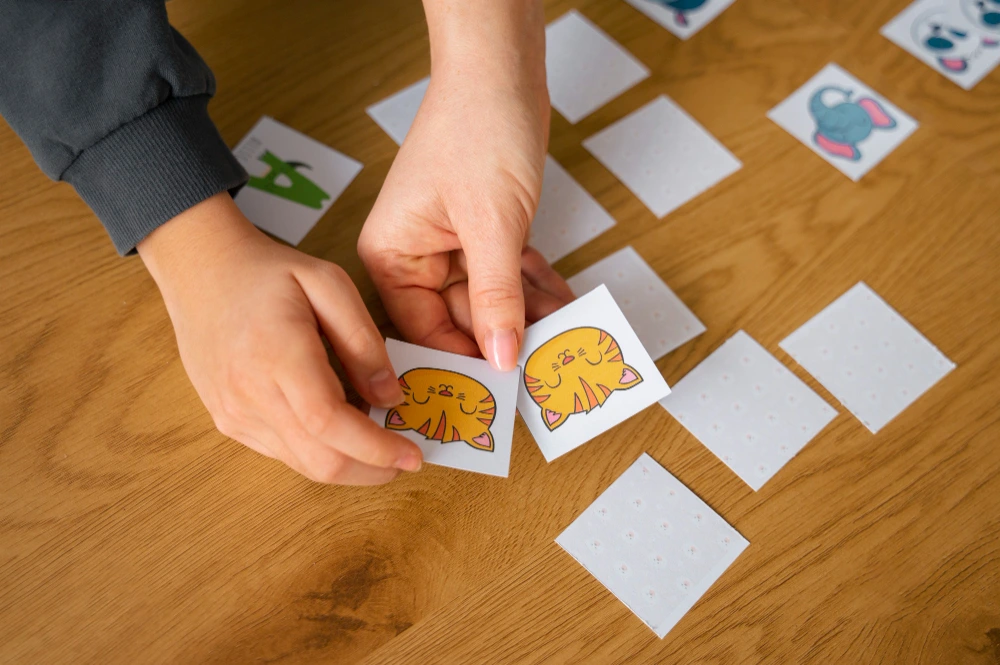
Mental health as a field is quite sensitive and serious in nature. Opening up to people about our feelings is not easy and can feel somewhat vulnerable. In countries like India, mental health remains a taboo and a difficult subject to talk about. Many individuals believe that talking about their thoughts and feelings openly is uncomfortable and awkward. This calls for a more light hearted revolution of mental health in India. One way to make things easier to talk about is through games and activities. It’s a myth that mental health related talk needs to be serious and involves pain and trauma. This myth prevents people from opening up to each other and reinforces the belief that feelings should be dealt with privately and vulnerabilities should remain inside closed doors. In the recent past, many organizations, therapists and mental health centers have successfully integrated the concept of mental health games and activities with their clients and patients and it has worked wonders. The use of games to improve mental health is still relatively new. Nonetheless, preliminary research, mostly on serious games, points to possible advantages for behavioral and psychological adjustments or symptom alleviation.
Games for mental health
Over the past few years, a lot of innovative game ideas for mental health have come up. These are games either specifically designed for mental health or integrated into the field of mental health. Here are some of the mental health related games-
1. Games linked to gratitude
We can often oversee the good in our lives especially when we are overwhelmed by a lot of negativity. According to a phenomenon called negativity bias, humans tend to pay more attention to negative things in our lives compared to positive things and we are more attuned to negative emotions as compared to positive emotions.Hence, psychologists believe that we need to go out of our way to perceive and absorb positive situations and positive emotions in our lives. One way of doing that would be to be grateful for all the good things in life. Gratitude can be expressed through writing down all the things, people or situations that we value in life. This is known as gratitude journaling and can involve even minor things such as a good weather, new clothes, a nice cup of tea, our pet etc. When we see written material as proof, things become more tangible and we can always go back to these pages when we feel like nothing in our lives is going according to what we planned. Another way to express gratitude would be through maintaining a gratitude jar. A gratitude jar consists of chits of paper with things written down in each piece of paper consisting of all the events that make us feel happy. Gratitude jar could be a team game where a jar is kept in any common area and people are free to insert their inputs daily. At the end of every month, a session could be organized where the entire team reads the chits and hence feel a sense of connection and togetherness. Lastly, in order to express how valuable certain people are in our lives, we can write them gratitude letters which include conveying to them how important they are in our lives and how they’ve made us happy in the recent past.
2. Mindfulness exercises
Breathing techniques and body scans are examples of mindfulness activities that can lower stress and improve mental health. The discipline of mindfulness involves being totally present and involved in the moment without passing judgment. To practice mindfulness with your loved ones, friends, or coworkers, think about organizing a lunchtime mindfulness session. In addition to encouraging relaxation and stress reduction, these sessions may foster a feeling of support and community. It just takes a few minutes to complete mindfulness activities, which may have a big impact on your general wellbeing. Mindfulness meditation, exercise, yoga, deep breathing guided imageries or visualisation exercises are some of the mindfulness techniques that can let us be present in the moment without thinking about past or future worries.
3. Thought record worksheet
Thought record worksheet is a method for writing down and analyzing one's thoughts. After asking the user to record their feelings and thoughts, along with the circumstances that led to those feelings, it asks them to consider whether or not their automatic ideas are supported by evidence. In addition to helping people educate themselves about CBT, this might be a useful addition to a psychotherapist-led CBT therapy. Indeed, one study has demonstrated that thought journals, even when used independently and without a cognitive behavioral therapy treatment plan, are a useful tool for changing beliefs (McManus et al., 2012).
4. Bursting mental health myths
In countries like India, where the importance of mental health has recently started growing, it is essential to psycho-educate people in the right direction. A lot of individuals assume things to be true about mental illnesses which are deep down false or factually incorrect. The lack of access to mental health awareness and resources in rural areas let the myth intensify until it becomes the reality for that region and eventually harms individuals. Discussions around bursting myths can be intense and can become heated if not handled the right way. Hence one of the most effective ways in which we can eliminate false beliefs whilst being psych-educated about mental health is by playing games related to myth bursting. This game can be made into a team game and takes less than 30 minutes. Two teams could be established and a number of statements could be presented to both the teams. The team which recognises and rectifies most number of myths wins the game.
5. Mental health Bingo
Mental health bingo is an excellent way of gamifying good habits that are essential for mental health. The bingo involves a sheet of paper with various positive coping mechanisms written down that ensure good mental health. A team leader could read out various statements and the person with the most positive coping mechanisms ticked off could win the game. This game not only posits a way to connect with others in a meaningful way, but also motivates people to engage in healthy ways to deal with their feelings.
6. Role playing games
By acting out various events, role-playing scenarios assist people in improving their empathy, communication, and coping mechanisms. Using questions or making up your own scenarios, you can do this exercise in a group or alone.People can improve their assertiveness, emotional intelligence, and problem-solving abilities by using role-playing scenarios. Participants may develop empathy, examine diverse viewpoints, and acquire practical strategies for dealing with difficult situations by rehearsing in a variety of scenarios, which will ultimately enhance their resilience and mental health.
7. Five senses test
The Five Senses Exercise is a mindfulness practice that invites people to use all five senses to concentrate on their current surroundings. Observing their environment, participants record their senses of sight, sound, taste, smell, and touch.By bringing people back to the present and diverting their focus from pressures and pessimistic thoughts, this practice encourages mindfulness. People can improve general mental health, lower anxiety, and increase emotional regulation by routinely performing the Five Senses Exercise.
8. CBT based games
CBT games engage people in an interactive, organized manner that encourages the growth of new abilities and constructive mental habits. These games are founded on the ideas of Cognitive Behavioral Therapy (CBT), which highlights the significance of cultivating more adaptable and positive thought patterns as well as the part negative thought patterns play in mental health problems. CBT games come in a variety of formats, including as role-playing games, card games, and computer-based games. These games are made to be fun and interactive, and they frequently include a variety of activities and challenges that assist players in learning new techniques and abilities for handling their mental health. For example, the game "Catch That Thought" involves catching a ball and then identifying and challenging a negative thought associated with a given situation.
9. The fishbowl game
There are three rounds in the Fishbowl game, and each one approaches mental health issues in a different way. In order to assist the group comprehend and talk about mental health ideas, a participant in Round 1 draws a word or phrase and explains it to them without actually speaking it. Other participants then guess the term. Round 2 encourages creative expression by having players act out a mental health-related word or action, similar to charades, while the group guesses what it is. In Round 3, a participant draws a word, and the group guesses it by answering yes/no questions. This encourages discussion of concepts related to mental health and how they are interpreted. Every round promotes understanding, empathy, and communication while providing a unique approach to discussing mental health.
10. Roll the dice, say something nice
A lot of people are predisposed to negative prejudice. This means that they overlook the 85% of positive reinforcement that is offered, fix on the poor parts of their performance, and get fixated on the constructive criticism. It might be the class or team's perfectionists. This is particularly beneficial if your team, school, or business is undergoing changes, as these situations often lead to a lot of complaints because individuals find change uncomfortable. Human nature is that way. However, by assisting people in identifying their successes, the positive aspects of their day, and reducing their obsession with perfection, we may rewire that thinking. This easy game is suitable for players of all ages. To play, you'll need this printed paper and a die (singular for dice).
Activities related to mental health
Apart from several games mentioned above, there are numerous activities that can be carried out either on an individual or group level which are related to mental health. Some of these activities are-
1. The feeling wheel
The 72 emotions on the Feeling Wheel are arranged into six categories on a straightforward printout: angry, sad, afraid, joyous, calm, and powerful. It may be a great aid for psychotherapy clients who struggle to articulate or explain their feelings, and it is represented as a colorful pie.72 emotions are grouped into six categories on the Feeling Wheel, which is a straightforward printout: angry, sad, terrified, joyous, calm, and powerful. It may be a great aid for psychotherapy clients who struggle to articulate or explain their feelings, and it is represented as a colorful pie. According to Kircanski et al. (2012), this method is frequently employed to assist clients in recognizing emotions, increasing their emotional vocabulary, and improving their emotional control. This approach is commonly used to help clients identify feelings, expand their emotional vocabulary, and enhance their emotional control.
2. Adult colouring books
It is a huge myth that colouring books are only meant for kids. In recent times, colouring has been used by adults as a de-stressing activity. Research has shown that structured colouring activities made for adults help in reduction of anxiety.Colouring books are a much better alternative to doom scrolling when one is bored or overwhelmed by stressors in life. It can help improve one’s concentration as well as counts as a pleasant activity that can be done alone, with friends or family!
3. Virtual Mental Health check ins
In today’s remotely connected world where it is extremely difficult to meet your closed ones in an offline manner every once and then when you need them. However, that doesn’t mean that we’re supposed to let our mental health go for a toss while we wait for everyone to co-ordinate dates and timings to meet in order to catch up. According to research, social support helps individuals in perceiving and dealing with stressful events in life. If we were to take advantage of the recently advanced technology, it is certainly possible to organize and host virtual mental health check ins with our loved ones at any time from any place in the world. It can be made even more fun by hosting game nights or movie nights or a simple “how are you doing” call could also improve an individual’s mood and help them to better cope with ongoing stressors. Virtual check-ins are mainly beneficial when it comes to saving time, cost and adhering to convenience amongst a busy and fast paced life.
4. Conversation starters
Connection and belonging are the most important foundations for a wellness culture. In today’s age of social media, people are more disconnected with each other than they have ever been. Despite technology’s role of bringing us together, we are isolated and lonely. At college, work or social gatherings, superficial conversations and small talk is what is making us feel disconnected and lonely. One solution to this trend could be setting up conversation starters that help individuals engage in deeper conversations and get to know each other better. This inturn helps in building a community where people support each other through rough and happy times. Some of the examples of conversation starters could be insightful questions such as
- What is one thing on your bucket list?
- What is one smell you never get tired of?
- What 3 things would you bring to a deserted island?
5. Therapy dogs
We don't have to tell you how amazing dogs are. Some of you may not be aware, though, that dogs may aid in your recovery process in addition to being devoted and loving friends. What are therapy dogs, you ask?Therapy dogs, also known as "comfort dogs," are taught to offer compassion and emotional support to humans. Additionally, these canines are excellent for helping and interacting with people in hospitals, nursing homes, retirement communities, disaster-affected areas, and other settings, in addition to helping those in need.
Conclusion
It is thus concluded that there are a lot of mental health games that can be played in order to spread awareness and participate in emotional well being. It is a profound myth that mental health involves avoiding disorders and diseases, however, in reality mental health means adding positively to our existence. One way to live your life rather than merely survive is to engage in these games. The above listed games are merely a sample of the many games pertaining to mental health. However it is important to note that merely engaging in light hearted games does not act as a full fledged treatment plan for individuals who have mental health disorders. Therapy, along with these games is extremely necessary to delve in deeper into our thought and behavior patterns. Nonetheless, these games serve as an excellent reminder that doing things for improving your mental health can be made fun and interesting!