“Evolutionary psychology is fun, even though it drives me crazy sometimes.” It’s difficult to trace the source of this quote, but it aptly surmises the experience of understanding something from the evolutionary school of thought. The evolutionary perspective, birthed from the extensive work of Charles Darwin, proposes that humans evolve in ways that provide them with an adaptive advantage to continue survival and procreation. Take something as mundane yet complex as emotions – subjectively experienced mental reactions to internal or external events – and evolutionary theory has a lot to say about how they come about, change, and impact the way people live their lives.
Darwinian Emotionality
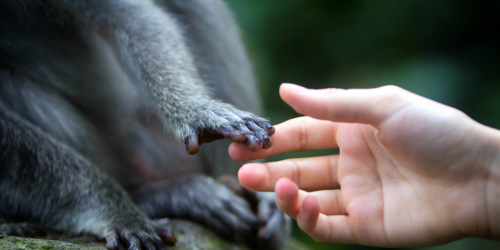
In his 1872 treatise The Expression of the Emotions in Man and Animals, Charles Darwin attempted to expand the application of his evolutionary theory beyond the domains of anatomical development and reproduction to include the mind and behaviour, particularly how emotions evolved over time. Emotions are strongly connected to culture, and this is a fact Darwin openly acknowledged. It tied closely to his argument that certain emotions like happiness, sadness, anger, and fear are similarly expressed across cultures, even those that are isolated from each other and thus have little opportunity for intergroup communication or learning. Of these, fear, anger and disgust were fundamental states called “basic emotions”. Moreover, Darwin also observed that some emotions were similarly expressed even across different, albeit closely related, species like humans and chimpanzees. Emotions, therefore, were likely to have an underlying genetic component or heritability.
The Behaviourists and Learned Emotions
The 1960s saw the rise of the behaviourists, a subset of psychological researchers who shunned Darwin’s idea of inherited emotions and instead proposed that all emotions could be learned. This happens through conditioning, a process by which certain environmental stimuli or consequences shape behaviour. Look at it this way: if you’re bitten by a dog (or witness someone getting bitten by a dog), you may experience intense fear or anxiety when you see a dog later or hear one barking. Children get excited over an ice-cream treat at the end of dinner and obediently finish all the veggies on their plate. Just thinking of the tall, fit basketball player jock from her class can make a girl giddy or aroused. It’s far-fetched, according to the behaviourists, to consider these emotions a mere product of genetic transmission. Instead, early behaviourist studies like Pavlov’s salivating dog and Thorndike’s cat in the puzzle box proposed that all emotions could be acquired through the learning principles of classical and operant conditioning. In particular, Watson and Raynor’s (1920) Little Albert experiment underlines the mechanism of the conditioned fear response, demonstrating how a phobia of furry objects was instilled in nine-month old Albert by repeatedly pairing it with a loud banging sound.
Primal Urges and the Emotional Brain
The behaviourists’ view is crucial to understanding the subsequent development of the evolutionary school. In response to the behaviourist claim that emotions are wholly acquired or learned, evolutionary psychologists sought help from neuroscience, including existing and emerging literature on the brain regions involved in emotion processing. The human brain has evolved over time to better adapt to environmental changes and survive in the face of threat or adversity. First, early mammals developed “primitive” cortical regions (like the amygdala, hippocampus and cingulate cortex) that allowed them to perform basic survival functions like feeding, reproduction and defense. Later mammals developed the neocortex that facilitated higher-order cognitive processes like attention, learning and memory, reasoning, planning, and (in humans) language. These different brain regions comprise the limbic system which is responsible for controlling emotion and behaviour in humans, mammals and some reptiles. The limbic system is also implicated in the fight-or-flight response, a mechanism activated in the face of a threatening or high-stress situation. While adaptive for our hunter-gatherer ancestors who lived in dangerous, animal-infested jungles, such a response is rather dysfunctional in modern-day stressful situations, like avoiding confrontation in relationships or faking sick before a major corporate presentation. The primitive brain, in all its bravado and cynicism, forgets that these events aren’t the contemporary equivalent to saber-toothed tigers or life-sized mammoths, so it’s all the more easy for us to fight or flee (or freeze). A similar evolutionary approach is used to explain the mechanism underlying psychiatric disorders like social phobias and obsessiveobessive compulsive disorder (OCD). Phobias are said to be a product of dominance hierarchies that are a common social arrangement among primates even today. Such dominance hierarchies are established through repeated encounters – often violent and aggressive – between members of a social group, with the defeated individual typically displaying fear and submissive behaviour. Likewise, compulsions – acts performed to relieve the distress caused by intrusive, obsessive thoughts – are a major component of OCD and are said to have major evolutionary roots. For example, fears of dirt or contamination that trigger continuous washing of hands are similar to many activities that animals engage in during high-stress situations, like grooming (a cat licking itself after a fight) or nesting (to protect eggs from predators).
Modern Evolutionary Perspectives on Emotions
It’s staple in psychology and other social sciences for scholars to take on criticism for older, outdated theories and devise new frameworks more suited to advancements in research and practice. Evolutionary theory, unfortunately, has not evolved as much as one would think. There are several proposed reasons why the traditional evolutionary theories of emotion, as posited by Darwin and his contemporaries, is too narrow in scope to comprehensively explain emotions and their development. First, it overly emphasises the subset of emotions that evolved among our ancestors to communicate or serve as as signals. For instance, there is no specific facial expression unique to envy, while involuntary twitches or movements serve no explainable signalling function. Secondly, it downplays the influence of learning and thought on emotional development: emotions in the modern day result from experiences far beyond threat perception or reproduction. Thirdly – and perhaps most importantly – the traditional theory has failed to incorporate the novel consequences of the evolutionary function of emotions: their role in higher-order cognition via perception, attention, memory and learning, planning and reasoning, attribution, categorisation and emotional intelligence.
Unlocking Your Emotional Intelligence: A Guide to Becoming More Self-AwareHere is where psychology steps in (with some handholding from neuroscience, of course). Studies in cognitive psychology provide enough evidence of the fact that emotions pervade nearly every aspect of mental and behavioural functioning, be it while making important career choices, gauging the vibe of a social gathering, choosing to order a particular dish you’re the “mood” for, or reflecting on why something made you more angry than it should have. Modern theories also account for a drastic expansion in the number of adaptive problems emotions now help us solve. Neuroimaging studies have further supported the probable evolution of brain areas associated with emotional circuits, like the role of the amygdala in fear and defence, and the expansion of the cortical surface to facilitate more complex social interaction and decision-making.
See more on emotions: Do you often get Angry?Conclusion: What This Means for Us
Emotions that facilitate survivalsurvial, as conceptualised by early evolutionary scholars, are no longer limited to fear, anger, and disgust; and other emotions are not merely “by products” of this basic triad. Other largely neglected emotions, like romantic and parental love, envy, sexual jealousy or remorse, are evidently just as universal. There is, therefore, no logical reason as to why they should be considered any less “basic” or important than the survival-oriented fear, anger and disgust. These emotions not only provide adaptive solutions to the problems of survival and reproduction, but are also integral to mate selection, mate retention, parenting, food acquisition, and navigating status hierarchies – processes that are similar to a great extent across cultures and even species. Other emotions that have not received much attention in evolutionary literature, like envy, embarrassment, guilt and romantic or passionate love, are arguably some of our most felt emotions; they help us survive and thrive nearly as much – if not more – as the need to gather food and make babies.
Know your emotions better by talking about them with Healo: our Advanced AI Therapist For Emotional Health & Happiness!