
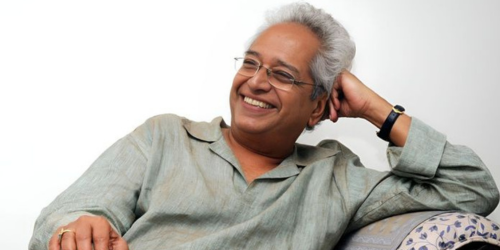
Sudhir Kakar, passed away on April 22, leaving behind a great legacy of psychoanalytical tradition in India. His unique approach to observing Indian society with a psychoanalytical lens significantly contributed to the field of psychology in India. Thus, his passing has left the community grieving a great loss for times to come.
Kakar was born in Nainital, India, on 25 July 1938. Following a brief stint studying engineering at the Indian Institute of Technology Kharagpur, he made his way into the field of psychology. As his curiosity for human behaviour grew, he attended Harvard University and studied under the renowned psychoanalyst Erik Erikson. Kakar pursued a PhD in Economics and trained as an analyst at the Sigmund Freud Institute in Frankfurt. His intellectual path was significantly shaped by this guidance, especially his emphasis on the interaction between culture and psychology. His early years, which were turbulent due to the Partition and radical movement, as well as his upbringing in a multicultural India, had a significant impact on his development of thought. Kakar primarily inquired about the intersectionality between identity, psychoanalysis, mythology, mysticism, and religion. A significant portion of his work included reframing the Indian psyche in the context of Western psychoanalysis, particularly about the conflict between individualism and collectivism. Rather than departing from Freud's vision, Kakar worked to expand it during his career. Famously, Freud refused to be called the "discoverer of the unconscious," praising philosophers and poets instead for that distinction Embracing this notion, Kakar integrated stories from Hindu mythologies and Urdu folk tales with ideas from Indian philosophers such as Gandhi, Tagore, and Vatsayana into his psychoanalytic framework. Through this method, a regional unconscious within psychoanalysis was defined and recognised globally. One of Kakar’s significant contributions is his exploration of the Indian concept of the self. In contrast to the Western enclosed self, he conceptualised the Hindu-Indian self as "much more open and strongly influenced by and intimately connected to its surround." The Hindu Indian perspective goes on to say that one's basic need is to belong to a community. Consequently, the two notions of “inclusiveness” and “universal consciousness” are prevalent throughout Sudhir’s work. It was the first of its kind for Kakar to look at Indian sexuality. In treading an uncommon subject, he explores the historical and cultural perspectives of intimacy and sexual expression in Indian society, as well as the influence of religion, social mores, and the colonial past on close relationships that oscillate between eroticism and asceticism. Aside from his psychoanalytic practice in Delhi and his global, multidisciplinary teaching activity, he has written twenty nonfiction books and six novels. Often spotted with a cigar, Sudhir Kakar was a romantic committed to uniting Eastern and Western thought. His contributions as a trailblazing psychotherapist, accomplished author, and cultural critic have a lasting impact on how we perceive the human experience. We pay tribute to a visionary who enhanced the intellectual and cultural landscapes as we remember him. His legacy continues with the Kakar Centre of Psychoanalysis and Culture, which is striving towards the formation of global psychoanalysis rather than local psychoanalysis, drawing resources from diverse civilizational foundations and varied conceptions of the human psyche thus revising the existing psychoanalytic perspective of basic concerns of human life, the human mind and the hunt for the psychic truth. Kakar’s passing marks the end of an era, but his influence will continue to be felt for generations.