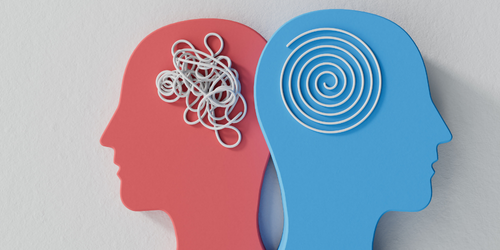

Competitive exams in India, like NEET, bring immense pressure due to societal and parental expectations. Recent controversies have exacerbated stress and confusion among students, leading to widespread mental health issues such as anxiety, depression, and burnout. Effective coping strategies are essential for students to thrive amidst these challenges.
Why are competitive exams such a big deal in India?
This is a question asked by many students in India and abroad for several decades now. In India there are about 300 competitive exams conducted every year. Out of these, 50 exams are conducted by government authorities for employment opportunities. Every one of us, I'm sure, knows a student who is taking or has recently taken an admission exam and just so happens to be our friend, kid,or cousin. According to recent data, the number of students taking competitive exams are increasing every year. But, we all sometimes wonder as to why these exams are so difficult to crack? The enormous increase in population is what makes these exams competitive in the first place. Secondly, the rigidity of secure careers in certain sectors in India is what makes these exams look dreamlike. Even though unconventional courses have emerged to provide students with options to choose what they like, traditional professions like doctors, engineers and lawyers and government officers continue to be considered as reputed and financially secure. Getting All India Ranks (AIR’s)and qualifying for government jobs or getting into well respected colleges for medicine,law or engineering has become a dream for a student in most households. Earlier, these exams were taken by a selected few and only the most skilled students who were capable and genuinely interested in their respective careers were chosen. The same competitive exams have now become a common affair and a routine procedure for most students. Lakhs of students apply for exams like NEET, JEE, UPSC and so many more, but only less than hundred actually get seats in their dream colleges. This sort of a mass production has made coaching institutes for JEE and NEET earn enormous profits. However, over these years, the gigantic amount of exam anxiety and pressure from society has had a detrimental impact on student’s mental health.
The sky-high expectations from parents and society
For several decades, students of India have been living in a pressurized environment when it comes to competitive exams. For some, the preparation of these exams starts right from middle school where the students can barely cope with physical and emotional changes in their lives. For most of them, this pressure is not internal, in fact, its main sources are primarily expectations from parents, peers and the society at large. Parents get lured through generational advice or media opinions and end up nudging their children into the direction of conventional and reputed courses through the means of competitive exams without realizing it’s demand and supply ratio. Most of them are aware of the competitiveness of each field, and instead of analyzing it realistically, force their children to study harder to gain that well-respected college or job. This causes an internalized compulsion amongst students to go through years of attempts for the same exam even though their interest lies somewhere else. Parents of India have failed to realize that their children are rather more capable of making better careers in their own field of interest.
In addition, society has classified competitive examinations that mostly include theoretical courses like arithmetic, physics, biology, and English, failing to recognize the potential of children who perform very well in other academic or skill-related fields.The portrayal of successful exam performers as intelligent and accomplished further heightens the pressure in students to perform well to meet parental and societal expectations. By the time they develop their own interests and likings, they are too deep into the field that their parents chose for them, hence they see no point in quitting. This translates into the sad reality that leaves lakhs of employees dissatisfied with their jobs. According to a report by Happyness, 59% of the Indian workforce is not happy at work.
What was the recent NEET controversy?
The controversy began after marksheets of some students surfaced on social media. A total of 67 students have achieved rank 1 by scoring 720/720 in their NEET exams. This was unusual as well as record breaking, which led to a lot of suspicions and concerns by the media and their fellow candidates. The National Testing Agency (NTA) tried to justify the number of toppers by saying that the paper was fairly easy this year and a larger number of students attempted this exam compared to previous years. However, the students pointed out that the exam was rather difficult this time. Upon further investigation, it was found out that several students in various states and centers had received grace marks which manipulated the entire result for most students. In some of the centers, wrong sets of papers were distributed to the students, and it took a lot of time from the administration to switch to the correct set of papers.The grace marks were allotted to make up for the time lost, in order to give everybody a “fair” chance. Many questions arise as to why they didn't give the students extra time to complete their paper instead of allotting grace marks? On what basis were these grace marks decided? In their defense, NTA communicated that the grace marks were defined according to a formula that was approved by the supreme court a few years ago. After additional research it was found that this formula, although approved by the supreme court to be used as a replacement for loss of time in competitive exams, was prohibited for any medical entrance exam.
Another important issue that comes up is rather unfair and bureaucratic. It was found that there was a paper leak in an exam center of Bihar. While NTA denies any such allegations,the Economic Offenses Unit of the Bihar Police had said last month that the results of their probe showed that about thirty-five candidates received the NEET-UG question papers and answers prior to the exam on May 5. Thus far, thirteen people have been taken into custody in relation to this investigation.
Lastly, out of the 67 candidates who got 720/720, 44 are on account of the revision in one answer key of physics. The grace marks were hence allotted to address the inconsistencies of NCERT textbooks which is not only unfair for the other candidates, but also a careless move from the side of the education ministry.
How has this controversy added to the stress and confusion for students?
The recent NEET controversy and NTA’s ignorance for the well-being of students has had a detrimental impact on student’s mental health. NEET is a difficult exam that requires several attempts until a student could get his ideal college. On top of that, the latest result scam has added to the anxiety and confusion of students who were so confident about their results. A lot of students claim that despite getting good marks, their ranks have been pushed down by thousands, which was not the case until last year. There are also students who have been giving NEET for years and can’t financially afford to give another attempt. Collectively, all of them feel like NTA has been playing with their future due to its unfair and unclear tendencies. Students who performed poorly on the NEET exam are experiencing emotional stress. Following the release of the NEET results, two student suicide instances from Rajasthan alone have surfaced.
Common mental health issues like anxiety, depression, and burnout
The competition is intense, and acceptance rates sometimes fall into the single digits at elite universities. Students suffer from demanding study schedules, restless nights, and an all-consuming worry of failing as a result, which affects every part of their life.One of this pressure culture's most obvious effects is its toll on mental health. Students studying for these tests are all too often plagued by anxiety, sadness, and fatigue. Persistent anxiety over falling short of social norms can cause debilitating feelings of inadequacy and self-doubt. Sadly, a great number of young people have taken their own lives because they were unable to handle the pressure of what was expected of them. According to the National Crime Records Bureau (NCRB), over 13,000 student suicides occurred in India in 2022, accounting for 7.6% of all suicide fatalities. Notably, after a record-breaking 26 student suicides in the town the year before, six students in Kota have committed themselves in the last two months, indicating a troubling trend. Furthermore, holistic growth is sometimes sacrificed in the sake of scholastic concentration. Rather than being pushed to think critically and creatively, students are urged to remember facts and statistics.
Stress-busting tips and tricks
While competitive exams can definitely seem overwhelming because of the intense competition and pressurized demands, there are some tips you can follow to ease the exam anxiety in you. Here are certain tricks to keep in mind to avoid getting overwhelmed-
- 1. Learn what works for you- We often see teachers and influencers telling us to study at a particular time, at a particular pace and in a specific way. Sometimes we also end up trying to replicate what our friends are doing in order to get better marks. However, we forget to realize that what works for them might not necessarily be the best approach for us.There are often myths that state that mornings are the best time to study, but in reality, we are all different humans who work best at different times of the day. If you think you can focus better at night or in the afternoon, go ahead and do so! Figure out what works for you and what doesn’t through trial and error. Don’t let yourself get sucked into the flow of society
- 2. Use smart study methods- Understanding a concept is really important for competitive exams. Gone are the school days where we could mug up a concept or a subject two days before the exam. In the real world, in order to crack difficult exams with intense competition, you will need to work smarter rather than work harder. We often confuse the amount of time we dedicate to studying with our knowledge about that subject. However, there are ways to understand and learn more material in a smaller amount of time. Consider using effective study tools like Mnemonics, flashcards, chunking, rhymes, mind maps etc. If you truly understand the concept and find a way to learn it which works for you, you will stand out from other students who are trying to cram more material right before their exams
- 3. Maintain a study-life balance- It might be very easy to assume that you can study intensively for a year and not inculcate any social or self-care activities in your life until you crack that exam. However, this approach will eventually catch up to you.Numerous studies have shown that putting your social life, hobbies, and interests on the back burner while studying can have negative effects on both your emotional and academic well-being. Hence try to allot some time of your day to stress busters that make you happy. It could be meeting your friends,dancing,art or any sports, literally anything that can help you unwind!
- 4.Make use of counseling and mental health services-If you feel extremely overwhelmed by the pressure, consider talking to a therapist or a mentor who can guide you through your academic challenges. Our company, Infiheal, has invented an AI therapist which can help you deal with your exam pressure and can even give you personalized suggestions to improve your concentration, discipline and study regime. Our AI mental health coach, which is curated by a team of esteemed psychologists, will help you in studying without distractions by our pomodoro timer and will also help you cope with academic pressure through our grounding exercises and self care cards! Click on the following link to enhance your academic journey, that too, completely for free! https://healo.infiheal.com/
Conclusion
It goes without saying that it's time to reconsider how we approach education and reframe what success looks like. We need to support students' hobbies, interests, and special abilities rather than treating them as nothing more than test results. Education ought to be a tool for empowerment rather than a way to keep social injustices alive. Academic accomplishment must not take precedence above mental health and well-being in our culture. To assist students in managing their stress and anxiety, educational institutions and schools must offer sufficient counseling and support services. In order to provide a supportive atmosphere where children feel comfortable asking for help when they need it, parents and educators must promote open communication In conclusion, the competitive exams in India are not just a rat race for academic competition, it’s a matter of life and death. We owe it to the future generations to create a more nurturing and inclusive environment that looks at students as human beings and not just labeling them on the basis of their marks.