
Introduction
Attachment is not limited to people alone. It is a psychological system designed to help us feel safe, reassured, and connected. In today’s world, technology has quietly entered this system. Our phones, apps, and digital spaces often function as sources of comfort, validation, and emotional regulation. This is where the idea of digital attachment becomes important, helping us understand how our relationship with technology reflects our attachment patterns with people.
Understanding Attachment Beyond Relationships
We often assume that when we talk about attachment, we’re talking about how we relate and act around our romantic partners. However, the vocabulary of attachment has been now expanded to include emotional bonds beyond merely romance..Attachment is an emotional bond that is established between any two or more contributors which can bring us joy, hurt or anger. It can make us feel the happiest and at the same time, it can feel like a rock has hit us. Attachment patterns shape not just romantic or parental bonds but also habits of dependence, avoidance, and reassurance-seeking in everyday life. Since we are living in an era where technology has become an integral part of everyday life, it is important to examine how our digital attachment styles are shaping us as humans. Earlier, technology functioned mainly as a tool, helping us connect with people across continents. Today, however, technology has moved beyond being a neutral medium. It has become an active contributor to how we form, maintain, and regulate emotional connections.
A critical shift can be seen in the invention and commercialisation of artificial intelligence and algorithm-driven systems. These technologies no longer simply facilitate interaction. They anticipate needs, respond in real time, and adapt to our behaviour. This creates experiences that feel increasingly personalised and relational. As a result, technology begins to resemble human-like interaction, blurring the boundary between tools and relationships and deeply influencing the way digital attachment styles develop.
So, what exactly is digital attachment?
Digital attachment refers to the emotional bond individuals form with devices, platforms, and even online identities. This bond develops through repeated interaction and is strengthened by design features such as instant feedback, personalisation, and algorithm-driven validation. Notifications, likes, and tailored content offer quick reassurance and emotional stimulation. Digital attachment in itself is not unhealthy. It becomes concerning when technology replaces our ability to self-soothe, process emotions, or seek support from people, turning devices into primary regulators of emotional states.
Types of digital attachment
Just like we have types for attachment styles in human relationships, here are some types of digital attachment styles that align with the way people use technology and the way technology affects us-
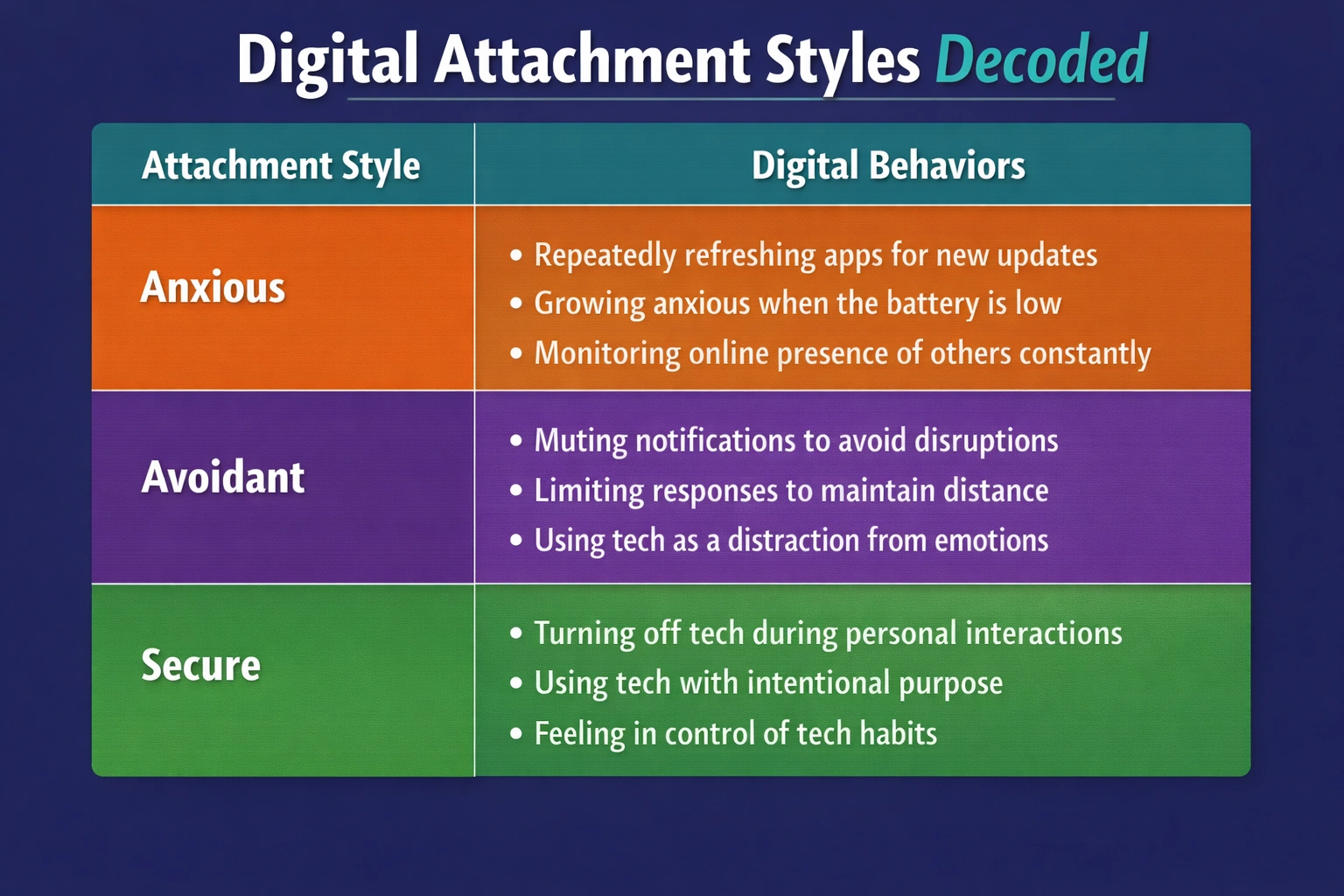
- Anxious Digital AttachmentAnxious digital attachment is marked by constant phone checking, fear of missing out, and distress when disconnected. Individuals may rely heavily on messages, notifications, or online validation for reassurance. This reflects anxiety around availability and responsiveness, where technology becomes a way to manage fears of being ignored or forgotten.
- Avoidant Digital AttachmentAvoidant digital attachment involves emotional distancing through excessive content consumption or prolonged screen use. Screens are used to avoid emotional discomfort or intimacy, offering controlled interaction without vulnerability. Technology becomes a buffer against closeness rather than a tool for connection.
- Secure Digital AttachmentSecure digital attachment reflects balanced engagement with technology. Devices are used to support connection, learning, and emotional regulation without dependence or avoidance. Technology remains a resource rather than an emotional substitute.
Why do we get emotionally attached to technology?
Many people wonder why we get emotionally attached to technology, and the answer lies in how effectively it meets core emotional needs. One key reason is predictability. Unlike human relationships, technology responds in consistent and immediate ways. Notifications arrive on cue, content refreshes endlessly, and interactions follow familiar patterns. This reliability creates a sense of control, which can feel deeply reassuring in an otherwise uncertain emotional world.
Technology also offers immediate reward. Likes, messages, recommendations, and feedback activate reward systems in the brain, providing quick relief from boredom, loneliness, or anxiety. These small but frequent rewards make technology an efficient tool for mood regulation, especially when emotional resources are low.
Another powerful factor is reduced emotional risk. Human relationships involve vulnerability, misunderstanding, and the possibility of rejection. Technology, in contrast, allows connection without exposure. One can engage, withdraw, or curate interactions without explaining or repairing emotional ruptures. This makes technology especially appealing during periods of stress, emotional overwhelm, or relational insecurity.
Over time, these features position technology as a reliable emotional buffer. It becomes a space where comfort can be accessed without negotiation, conflict, or unpredictability. While this does not mean technology replaces relationships entirely, it explains why emotional attachment to devices can develop so easily, particularly when emotional needs feel unmet or difficult to express elsewhere.
How to Develop a Secure Digital Attachment Style
Developing a secure digital attachment style with technology begins with awareness rather than restriction. The goal is not to eliminate screen use, but to understand what emotional need technology is fulfilling in different moments. Noticing when technology is used for connection versus avoidance helps build intentionality. Healo can help you reflect on what emotional needs social media is filling for you and guide you towards a secure relationship with your devices.
Creating emotional variety is equally important. When comfort, validation, and stimulation come from multiple sources such as relationships, movement, creativity, or reflection, technology no longer carries the full weight of emotional regulation. This reduces dependency and increases flexibility.
Setting gentle boundaries supports security. This might include designated offline moments, reduced reliance on notifications, or intentional breaks that are chosen rather than forced. Boundaries work best when they are grounded in self-trust, not self-control. If you’re confused about your relationship with social media and want deeper insights on it, take our Social Media Dependency Test
Finally, using technology in ways that deepen awareness rather than distraction supports secure attachment. Engaging with content that encourages reflection, learning, or meaningful connection helps technology function as a supportive tool. When technology aligns with values rather than replaces emotional needs, a secure digital attachment style naturally develops.